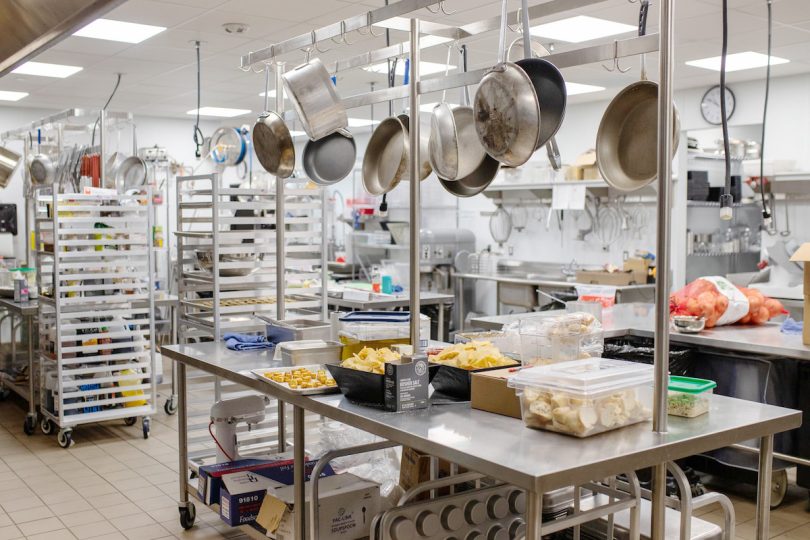

Rising operating costs in the hospitality sector are encouraging increased investment in commercial kitchen supplies as food and beverage companies adapt to continuous cost constraints. Based on industry trends, spending seems to be more concerned with efficiency than growth.
Food inflation is still high at 3.0 percent annually, even if some venues project monthly energy bills of up to $25,000 and wage growth of 4 to 5 percent. The Australian commercial kitchen appliances market, which is predicted to increase from $1.3 billion in 2024 to $2.6 billion by 2033, would benefit from owners of cafes and restaurants prioritising energy-efficient equipment.
The Financial Situation Hospitality Businesses Face

The figures show a difficult situation. As of June 2025, the Australian Bureau of Statistics reports a 3.0% yearly increase in food and non-alcoholic beverages. In the last three years, food prices have increased by 30%. Fruit and vegetables alone spiked 4.3% in the June quarter. This creates substantial pressure on menu pricing and profit margins.
Energy costs present an equally significant burden. Some businesses now face monthly energy bills of $25,000. This cost ultimately transfers to consumers through higher menu prices. Consumer tolerance for price increases has limits as household budgets tighten across the country.
Labour costs compound the pressure. The 2025 minimum wage increase brought 4% rises for permanent staff and 5.1% for sponsored employees. Sunday hospitality workers now cost operators more than $70 per hour. Finding qualified staff remains difficult across the sector.
The cumulative impact is severe. A 2024 industry report revealed that 44% of restaurateurs reported worse financial positions than the previous year. Research from Lightspeed indicates that 99% of hospitality venues have been affected by the cost-of-living crisis. Credit reporting bureau CreditorWatch highlighted that hospitality ranks first among industries for external administrations.
Profit margins are still declining even though cafés and restaurants’ sales increased by 2.5% to $66.27 billion in the fiscal year ending in June 2025. Raising pricing or fully absorbing costs are tough decisions for many operators.
Market Growth Signals Strategic Response
This economic pressure is driving unexpected growth in the commercial kitchen equipment sector. The market is expected to grow to $2.6 billion by 2033, according to industry analysts. A compound annual growth rate of 7.17% is therefore represented. In particular, commercial cooking equipment is expected to increase from $178.3 million in 2023 to $307 million in 2030. By 2030, unit sales are predicted to have more than doubled from 26,000 units in 2023 to 56,000 units.
The growth reflects a deliberate response rather than contradiction. Operators are recognising that appropriate equipment investments can reduce mounting operational costs. Energy-efficient refrigeration and smart cooking systems represent operational necessities. Automated dishwashing has become essential rather than discretionary. Complete Wholesale Suppliers reports increased interest from operators seeking equipment solutions that address both immediate efficiency needs and long-term cost management.
Franchise expansion is also driving demand. Wendy’s plans to open 200 restaurants across Australia by 2034 through a master franchise agreement. This expansion requires substantial investment in cooking equipment infrastructure.
Regional market concentration remains strong in New South Wales and Victoria. Queensland also shows significant activity. Together these states account for more than 80% of foodservice establishments. New South Wales and the Australian Capital Territory captured 34.2% of market share in 2024 driven by high urbanisation and population density.
Energy Efficiency as Operational Necessity
Energy management systems have the potential to reduce utility costs by 15% to 25%. For a business that spends $25,000 on electricity, this means savings of $3,750 to $6,250 a month. Savings might be between $45,000 and $75,000 a year.
In contemporary refrigeration units with sufficient insulation, compressors cannot run continuously. This design concept is particularly helpful in Australian climates. Commercial kitchens may experience temperatures above 35 to 40 degrees Celsius at peak service periods.
Regulation advancements are hastening this change. In July 2024, government officials made the decision to expand the Greenhouse and Energy Minimum Standards program. They also promised to develop a plan for a ten-year program on equipment energy efficiency. The goal of this program is to lower emissions in the hotel industry while assisting Australian companies in selecting energy-efficient appliances.
Energy-efficient stoves and refrigerators are gaining popularity. Induction dishwashers and cooktops are also becoming more and more popular. Solutions that satisfy energy efficiency standards are being aggressively sought after by commercial kitchens. In March 2025, major manufacturer Electrolux announced the launch of a new line of smart sensor-equipped sustainable appliances in Australia.
Technology Integration Beyond Energy Savings
Commercial kitchen operations are changing in a number of ways as a result of technology integration. Cooking operations can be remotely monitored and controlled by smart kitchen appliances with Wi-Fi connectivity. Energy consumption is optimised via programmable settings and real-time monitoring. Consistent operating standards are guaranteed by these systems.
According to market data, by the end of 2024, half of Australian households have at least one smart kitchen appliance. Compared to 36% in 2023, this indicates a rise. As the hotel sector continues to recover from the pandemic, commercial adoption is speeding up. The trend toward automation addresses labour challenges directly. Automated cooking systems ensure consistency while reducing dependency on increasingly expensive staff.
Cloud-based monitoring systems enable operators to make informed decisions about equipment maintenance. These platforms track inventory management and energy consumption patterns. Predictive maintenance capabilities reduce unexpected equipment failures during peak service periods. Complete Wholesale Suppliers and similar distributors are experiencing increased demand for IoT-enabled equipment that provides operational insights.
Multi-functional equipment is gaining preference as operators seek to consolidate operations. This equipment reduces both kitchen footprint and labour requirements. Devices that perform multiple functions reduce capital requirements while improving operational flexibility.
Investment Considerations and Cost Analysis

Equipment investment decisions require careful analysis of operational impact and return timeframes. Priority categories typically include:
- Refrigeration systems that operate continuously and consume substantial energy
- Cooking equipment that affects both efficiency and labour costs
- Dishwashing systems that impact water and energy simultaneously
- Ventilation systems that affect energy use and regulatory compliance
Depending on size and features, commercial kitchen fitout costs vary considerably. Basic upgrades cost between $1,500 and $3,000 per square meter. For mid-range installations, the typical cost per square meter is between $3,000 and $5,000. The price per square meter or more of a large production kitchen might range from $5,000 to $8,000.
The average cost of a 20-40 square meter small café kitchen is between $50,000 and $200,000 or more. Restaurant kitchens that are between 60 and 100 square meters often cost between $200,000 and $500,000 or more.
Industry research emphasises the importance of total cost of ownership analysis rather than purchase price alone. Energy consumption over equipment lifespan factors into comprehensive investment evaluation. Maintenance and repair costs also play a role. Training requirements and eventual replacement costs complete the picture.
Market Outlook and Strategic Implications
The Australian commercial kitchen supplies sector is experiencing fundamental transformation driven by economic necessity. Operating cost pressures create genuine challenges for food and beverage operators. These same pressures are simultaneously accelerating modernisation of infrastructure that has been delayed for years.
Operators who approach equipment investment strategically are positioning themselves for success. Those prioritising energy efficiency and automation capabilities over short-term capital conservation gain competitive advantages. The market’s projected growth toward $2.6 billion by 2033 suggests that industry participants recognise equipment investment as essential during uncertain economic periods.
Queensland is forecast to experience the strongest regional growth at 7.12% compound annual growth rate through 2030. This stems from population gains and household rebate programs. Regional variation reflects differing economic conditions and policy environments across Australian states.
The transformation extends beyond individual business decisions to broader industry restructuring. For the first time in recent history, the proportion of chain restaurants in Australia has grown from 23% to 24%. This potentially signals a fundamental shift in market structure as operational pressures favor businesses with stronger capital bases.
Conclusion
Economic pressure is reshaping how Australian hospitality businesses approach commercial kitchen supplies and equipment investment. The sector’s projected doubling to $2.6 billion by 2033 reflects recognition that wise equipment decisions represent survival tools. As cost pressures intensify across food and energy categories, operators who invest in technology-enabled equipment are creating sustainable competitive advantages that extend well beyond the current economic cycle.